
Our Compost Facility:
Growing a Greener Future in HAMPTON ROADS
Rooted in Local History:
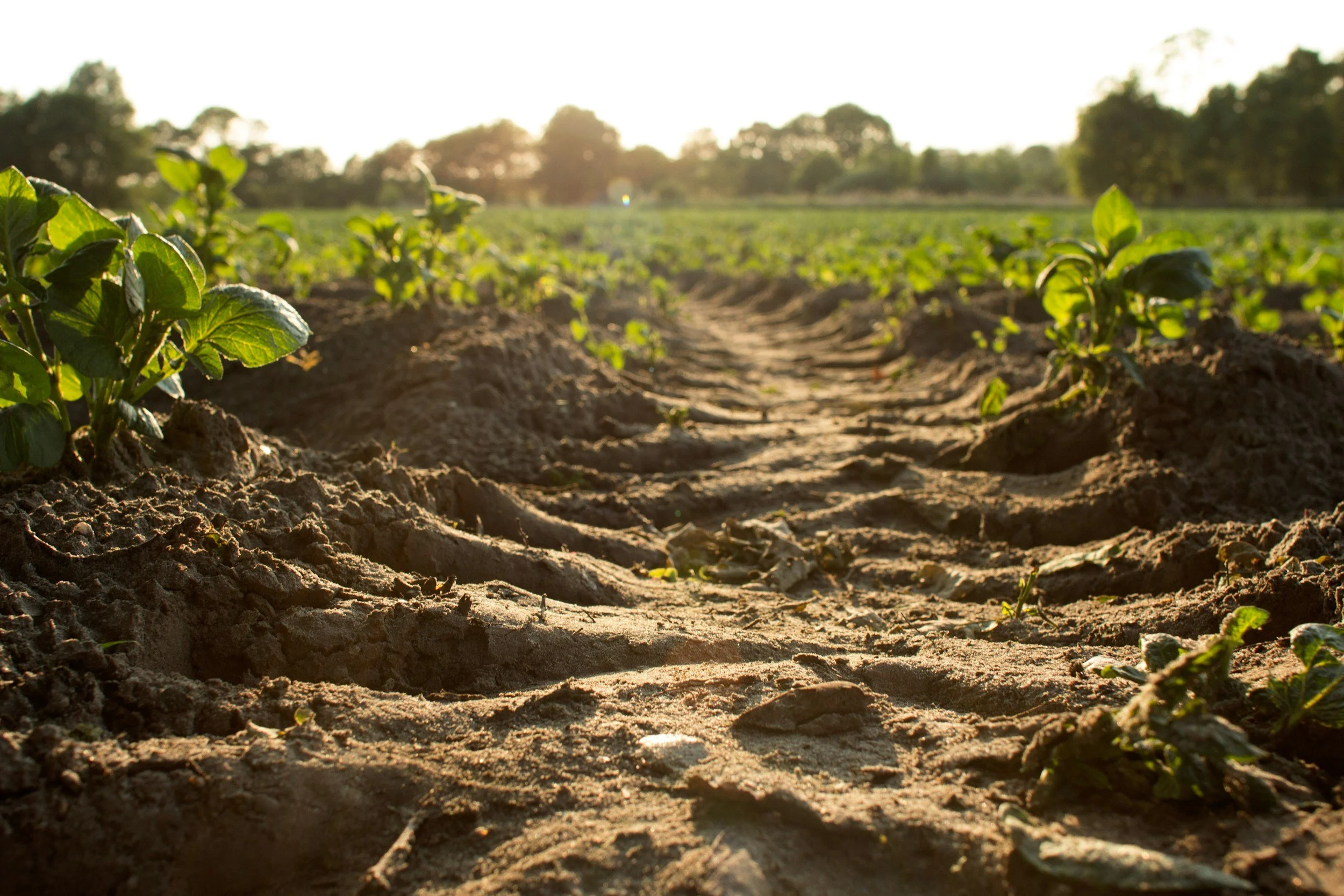
Our future composting facility sits on family farmland that’s been worked and loved since the 1920’s. Generations of hands have tilled this soil, and today, we’re transforming a small piece of that same land into a modern hub for sustainability and soil regeneration.
This project is more than just a facility—it’s a continuation of our family legacy and a tangible way we can give back to our community and our environment.
Project Update: Help Us Bring Community Composting to Chesapeake
As we continue working toward developing our composting facility, we want to share an important update.
While we’ve made meaningful progress, we’ve also encountered significant regulatory hurdles due to how the City of Chesapeake currently classifies composting operations. Under existing city code, composting facilities are grouped under solid waste management facilities, alongside landfills. This means small composting operations like ours are required to meet the same stringent standards designed for large-scale landfill operations.
Why This Is a Challenge
The current ordinance does not distinguish between a small, community-focused composting site and a landfill. As a result, we are facing requirements such as:
A 1,500-foot setback from residential zoning
A 50-foot-wide intensive vegetative buffer—requiring 75 shrubs and 9 mature trees per 100 linear feet—surrounding the entire composting operation.
Additional design and infrastructure standards intended for landfill-scale operations
While these regulations may be appropriate for landfill operations, they do not reflect the reality of composting—especially at the small, community scale we are proposing. In fact, the current requirements are significantly more stringent than those established by other municipalities in VA and greatly exceed standards set by the Virginia Department of Environmental Quality (VA DEQ). Notably, the required setback is more than seven times greater than what VA DEQ mandates. These excessive standards not only make the project financially unfeasible for a grassroots startup, but also severely constrain the layout, functionality, and long-term agricultural viability of our property.
Composting Is Not Landfilling
Composting and landfilling are fundamentally different processes:
Landfills bury waste in low-oxygen environments, producing methane—a greenhouse gas 80x more potent than carbon dioxide.
Composting is an aerobic process that transforms organic material into a nutrient-rich soil amendment, reducing methane emissions entirely when done properly.
Composting returns nutrients to the soil, improves water retention, reduces erosion, and supports local agriculture.
Small-scale composting facilities are typically low-impact, community-oriented, and agricultural in nature, not industrial waste sites.
Why This Matters for Our Community
Food waste is one of the largest components of our waste stream. In fact:
30–40% of the U.S. food supply is wasted
Food waste is the single largest material sent to landfills
Diverting food waste to composting is one of the most effective climate solutions available today
By establishing a local composting facility, we can:
Reduce landfill waste and harmful emissions
Create high-quality compost to improve local soils and support agriculture
Keep valuable resources circulating within our community
Build a more resilient, sustainable regional food system
We believe in a decentralized composting model—one that includes many small-scale facilities distributed throughout our region, making composting accessible, efficient, and community-driven.
Our Path Forward
Given the current regulatory landscape, we’ve made the difficult but necessary decision to pivot our approach.
We are now working with local partners, organizations, and stakeholders to advocate for updates to the City’s zoning ordinance—specifically, to create a distinct regulatory category for composting facilities that reflects their unique environmental and agricultural benefits.
We are hopeful that City Council will consider directing the Planning Commission to explore these changes, including appropriate standards for setbacks, buffering, and operations that are tailored to composting—not landfills.
We Need Your Help
This is where you come in.
If you believe in building a more sustainable future for our region, we ask for your support:
Reach out to your local representatives and ask them to revisit and modernize the current code
Share why composting matters to you and your community
Help us advocate for policies that support innovation, sustainability, and local solutions
Together, we can bring the area’s first permitted, food waste-focused composting facility to our community—and create a model for others to follow.
If you’re interested in getting involved or learning more, we’d love to connect.
Facility Development Timeline
We’re excited to share the key phases of development for our upcoming compost facility! Below is a projected timeline outlining each major milestone on our path to opening:
🍂 Fall 2026
Chesapeake Planning Commission & City Council Review
We’ll present our facility plans to the City of Chesapeake for official review and approval. This is a critical step to ensure our site meets all local zoning and land use requirements.
❄️ Winter 2026–2027
Virginia Department of Environmental Quality (DEQ) Review
Pending city approval, we’ll submit our Solid Waste Management Facility Permit application to the Virginia DEQ for technical review and environmental compliance.
🌱 Spring 2027
Construction Begins
With all necessary approvals in place, we’ll break ground and begin building the infrastructure for our facility—designed with environmental stewardship, community impact, and operational sustainability in mind.
🌾 Summer/Fall 2027
Facility Opening
We officially open our doors to begin processing local food waste into nutrient-rich compost—supporting healthier soils, reduced landfill waste, and a more resilient region.
Our site location: 1740 Blue Ridge Road, Chesapeake, VA 23322

Why We’re Building This Facility
Every year, millions of pounds of organic waste in Hampton Roads ends up in landfills—where it produces methane, a potent greenhouse gas. At Tidewater Compost, we’re flipping the script.
Our new compost facility will help divert local food scraps, yard waste, and other organics away from landfills and back into the soil—creating nutrient-rich compost to nourish gardens, farms, and green spaces across our region.
Key Goals of the Facility:
Divert organic waste and reduce greenhouse gas emissions
Support local farms and gardens with nutrient-rich compost
Serve as a hub for environmental education and outreach
Be a good neighbor and community asset

wHAT YOU CAN eXPECT
A Community-Focused Approach
We understand the concerns that can arise when introducing new infrastructure into a community. That’s why we’ve gone above and beyond to ensure our site will have minimal impact on the surrounding area:
Facility visitors are by appointment only. This will have a minimal traffic impact
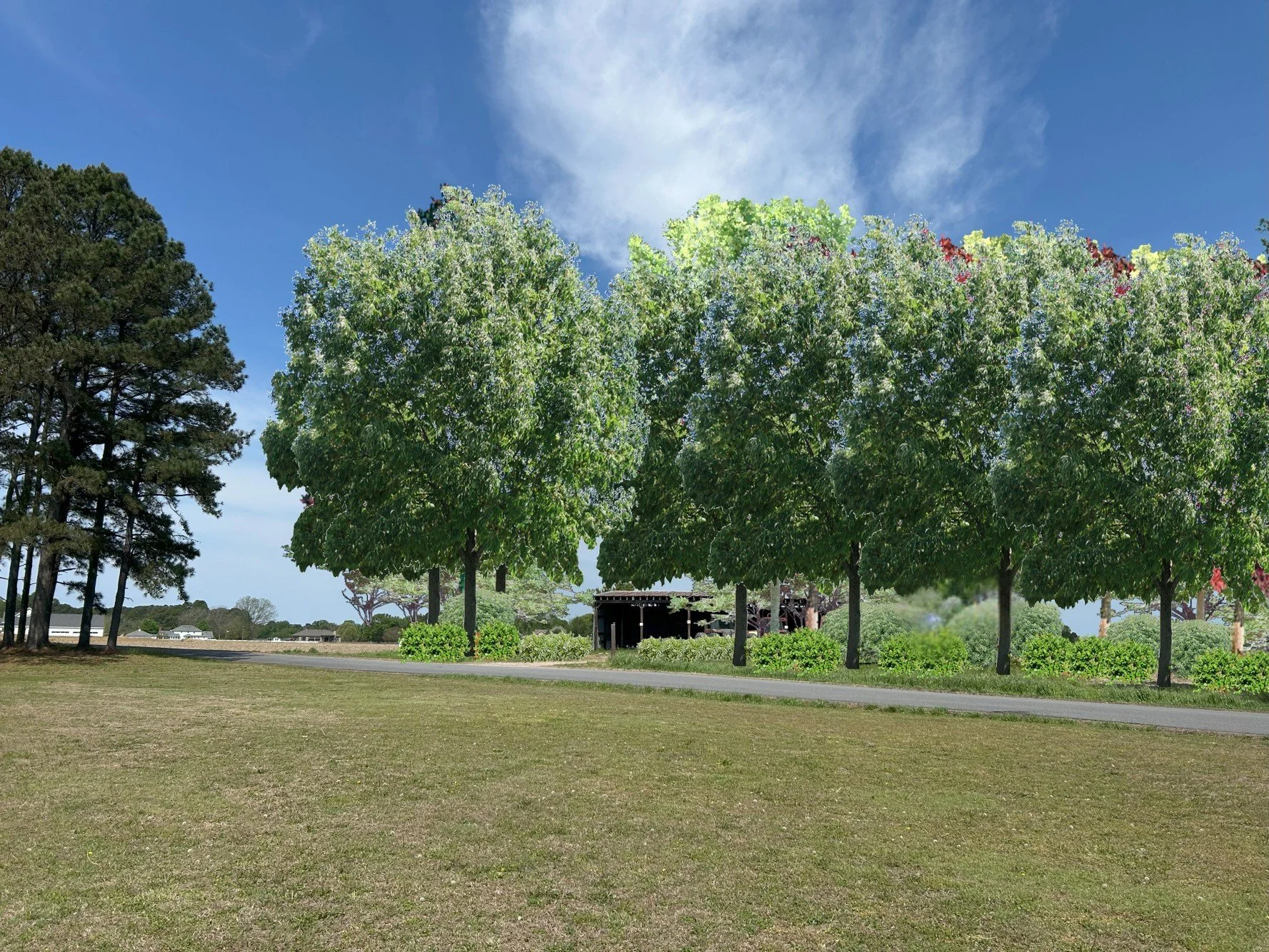
Facility screened by plantings, trees, and existing structures
Operations scheduled to avoid peak residential hours
This facility will meet or exceed the rigorous environmental standards set by the Virginia Department of Environmental Quality (DEQ) and the City of Chesapeake. Our design incorporates:
Enclosed operations for optimum composting performance
Strict dust, noise, odor, vector and litter control procedures
Bioretention systems for proper stormwater management
Dark-sky compliant lighting to minimize light pollution
Ongoing community engagement and transparency
We’re proud to be part of the neighborhood and are committed to being good neighbors every step of the way
🌍 Community Impact & Education
At Tidewater Compost, our mission goes beyond collecting food waste—we're building a more sustainable and connected community through composting education, partnerships, and action.
Since our founding, we’ve proudly returned over 175,000 lbs. of finished compost back into local soils—supporting community gardens, food pantries, and neighborhood greening efforts across Hampton Roads.
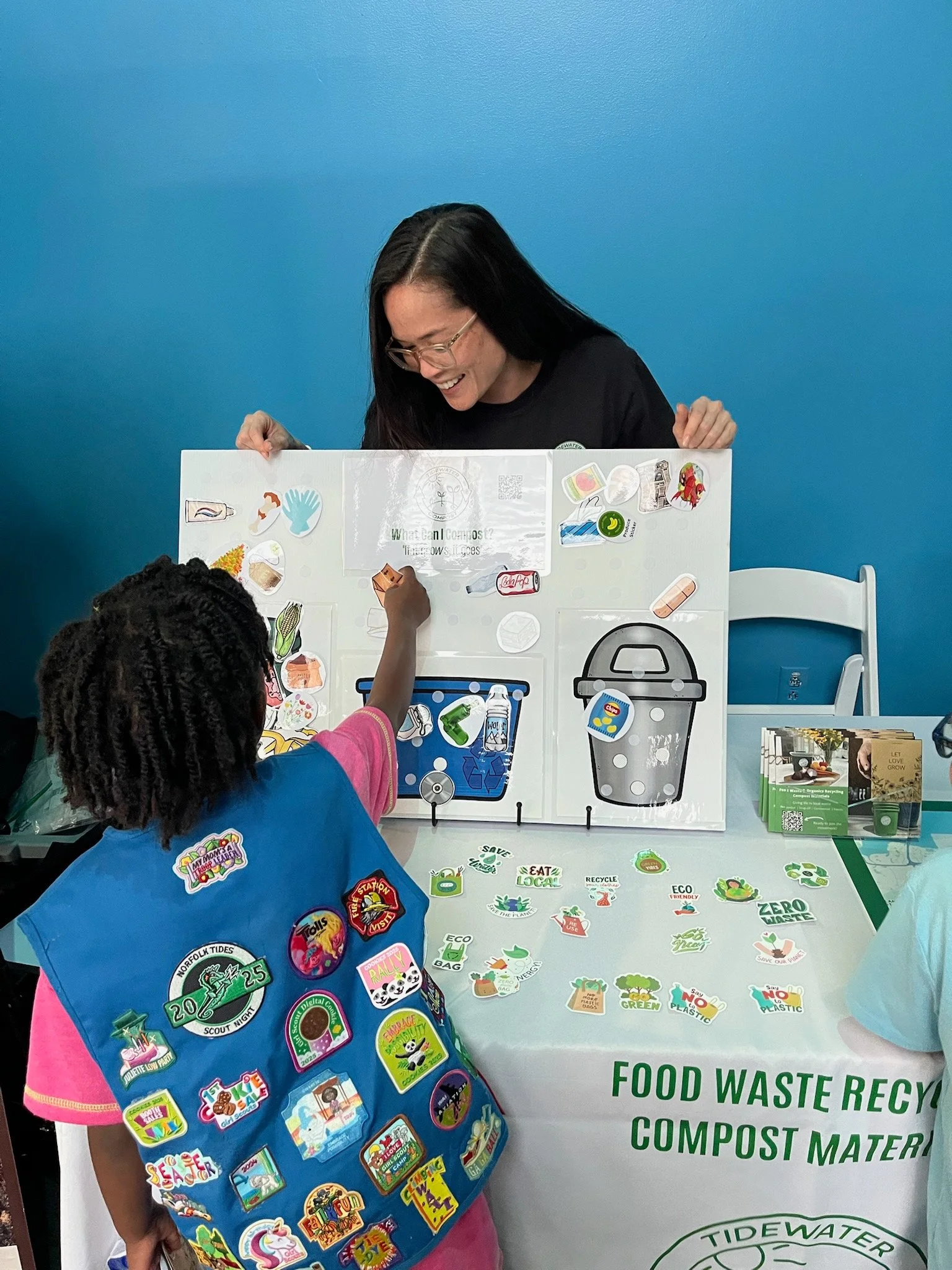
We're honored to partner with incredible organizations like Operation Smile, Chesapeake Bay Foundation, LRNow, Elizabeth River Project, Norfolk Botanical Gardens, and the Virginia Zoo to educate residents of all ages about the importance of food waste recycling and the environmental power of composting. These community partnerships and collaborative events allow us to share knowledge, answer questions, and grow the movement—one conversation at a time.
We’ve also had the privilege of meeting with local businesses, civic leagues, churches, and municipal sustainability commissions and clubs to spotlight how composting can play a meaningful role in local waste reduction, climate action, and community health.
Looking ahead, we're making composting even more accessible to the next generation by launching school composting programs with Virginia Beach City Public Schools and the Girl Scouts of Colonial Coast. Through these initiatives, our youth will gain hands-on experience in sustainability- helping young leaders explore environmental stewardship and understand their role in reducing food waste and protecting the planet.
Together, we’re turning food scraps into fertile ground for change—thank you for being part of the movement!
“We don’t just want to make compost—we want to make a difference. Together, we can give life to local waste”
We Want to Hear from You
This project is being built with the community in mind, and we welcome your thoughts. Have a question, concern, or idea? Don’t hesitate to reach out. We’re listening—and we’re here to work together.